
 WHAT IS OCEAN LITERACY?
Ocean Literacy is… “an understanding of the ocean’s influence on you – and your influence on the ocean. An ocean-literate person understands the essential principles and fundamental concepts about the functioning of the ocean; can communicate about the ocean in a meaningful way; and is able to make informed and responsible decisions regarding the ocean and its resources.” (NOAA)
To be ocean literate is not simply knowing everything there is to know about the ocean, but rather understanding the fundamental aspects of our relationship with the ocean and using that knowledge to guide our decisions and actions. Communication is also an important aspect of ocean literacy, just like it is an important skill in being a successful conservation leader.
HOW DO WE INCORPORATE IT INTO OUR PROGRAMMING?
Phase 1 of the Conservation Leadership Program is grounded in the ocean literacy framework. The National Marine Educators Practitioners Guide (2021) was a guiding resource for curriculum development, focusing on the major standards and concepts within each Essential Principle.
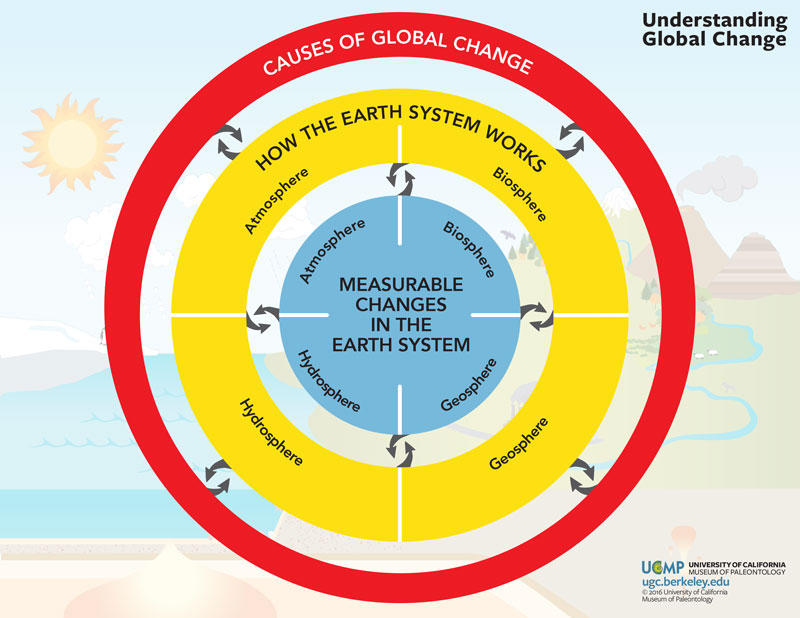 The Understanding Global Change (UGC) framework, developed by UC Berkeley and the UC Museum of Paleontology, is a modeling tool designed to explore the interactions between human and natural processes and their environmental impacts. The three key components of the UGC framework are causes of global change, how the Earth’s system works, and measurable changes. This online tool allows students and instructors to create flow diagrams that visualize and explain complex global processes affecting local and global systems.
As part of the Conservation Leadership Program, students will use the UGC platform to develop models that reflect their understanding of weekly topics. Topics include ocean circulation, carbon cycling, food web interactions, ecosystem services, and human health, among others. Through this process, students will strengthen their ability to interpret Earth system models and effectively communicate complex environmental issues—both essential skills for future conservation leaders.
In this course, students will develop technical skills in ArcGIS, becoming well-versed in mapping, spatial analysis, and data visualization. Through hands-on projects, they will learn to apply these skills to real-world ocean and climate datasets, building both technical expertise and an understanding of how geographic information can inform conservation and environmental decision-making.

Community Conversations are an important component of our curricula. It involves students engaging with local community members to discuss various topics related to ocean literacy covered in the course. Students are encouraged to reflect on these conversations, exploring how the community views and connects with ocean-related issues such as marine conservation, climate change, and sustainable practices. These reflections help students understand different perspectives, strengthen their communication skills, and deepen their connection to the broader societal impact of marine science.