Building Conservation Leaders: Our First In-Person Workshop


Building Conservation Leaders: Our First In-Person Workshop
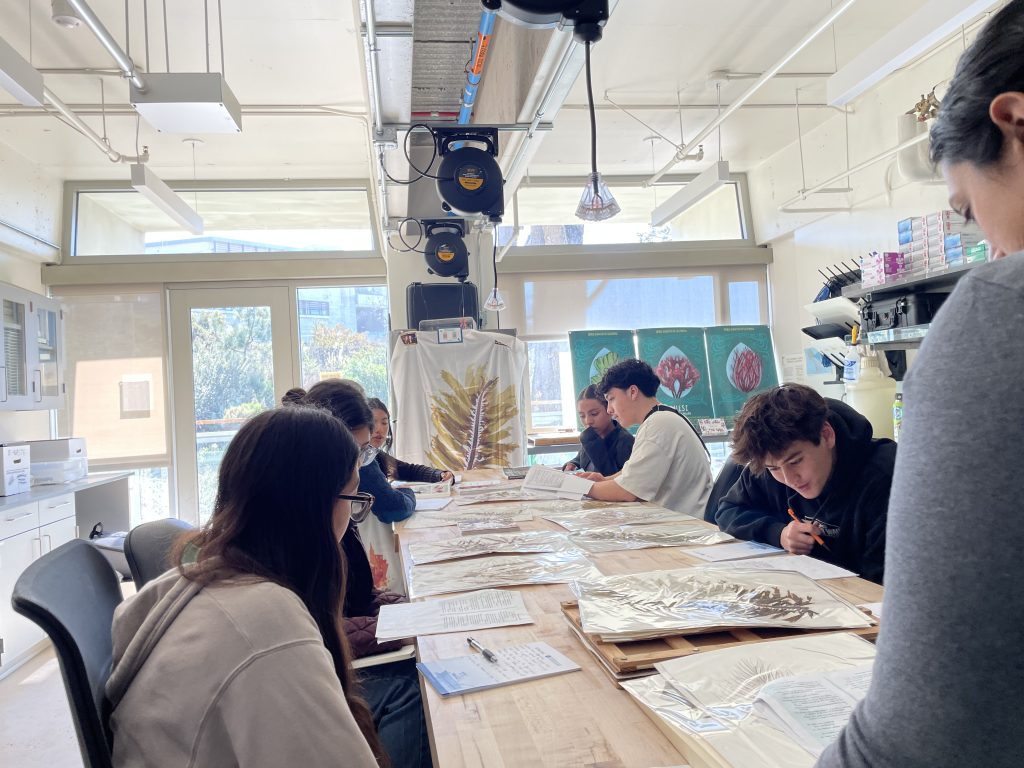
On February 15, we officially launched the Conservation Leadership Program, bringing together an inspiring group of high school students eager to explore ocean literacy, climate science, and conservation leadership. This marked our first in-person meeting, a dynamic Saturday session that set the tone for an engaging six-week journey.
Our Student Cohort
Our diverse cohort includes students from 9 high schools across San Diego County, representing a range of backgrounds and perspectives. With an average GPA of 3.8, these students are already demonstrating their dedication to learning and leadership. Their enthusiasm for conservation stems from their unique experiences and academic interests, making this an exciting and enriching group to work with.
Deep Sea Discoveries & Climate Science
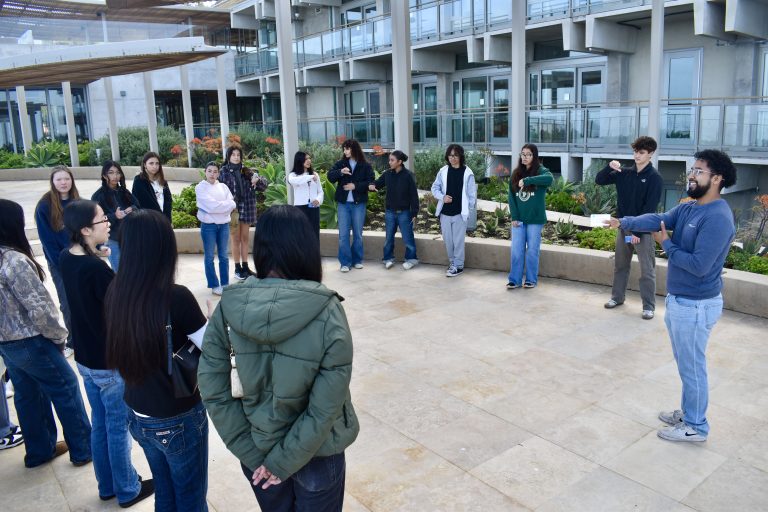
To kick off the day, Maura and Alberto welcomed students and introduced the purpose of the program—equipping young leaders with the knowledge and tools to drive conservation efforts. The session began with a fun introduction game using the Deep Sea Discovery card game. Each student selected a marine organism and shared its ocean depth range while their peers guessed where it might be found.
From there, students split into two groups to dive deeper into climate science and ocean processes:
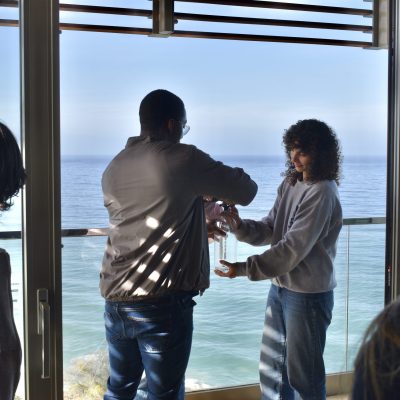
🔬 One group joined Maura for a hands-on session on cloud formation with Dr. Jeramy Dedrick and Christian Pelayo. Students explored cloud seeding and the science behind atmospheric processes, tying into the climate work at Professor Lynn Russell’s lab at Scripps Institution of Oceanography.
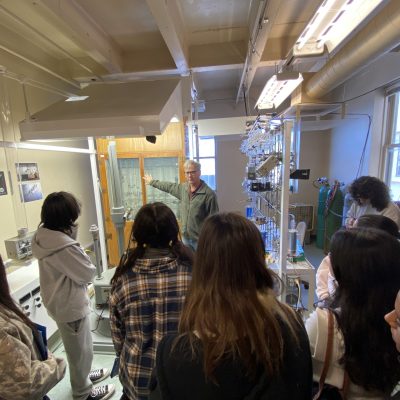
🌍 The other group visited Professor Ralph Keeling’s lab, where Dr. Keeling shared insights on the Keeling Curve, a fundamental dataset tracking atmospheric CO₂ levels. Students learned about the significance of long-term climate monitoring and the role of ocean processes in carbon cycling.
At the halfway point, the groups switched sessions, ensuring everyone had the opportunity to engage with both labs.
Deep Sea Discoveries & Climate Science
Before this Saturday’s hands-on experiences, students participated in an introductory Zoom session to explore macroscale ocean processes—the foundation of our ocean literacy curriculum. Led by Alberto Rivera, this session introduced concepts like:
- Wind and Ocean Circulation – How large-scale patterns drive climate and weather.
- The Hadley Cell – One of the atmospheric circulation cells that contribute to shaping global climate.
- Ekman Transport – How the Earth’s rotation influences ocean currents.
- Carbon Sequestration & Ocean Conveyor Belts – How the ocean plays a key role in absorbing and distributing carbon.
Students engaged in interactive discussions, using real-time Earth models to explore oceanic patterns. This background knowledge prepared them for the conversations and hands-on experiments they participated in during Saturday’s session.
Deep Sea Discoveries & Climate Science
At the end of the day, we asked students to reflect on their biggest takeaways from the session.
Some common themes that emerged included:
🌊 The importance of ocean processes in shaping climate patterns.
☁️ How human activities influence cloud formation and atmospheric changes.
📊 The role of long-term datasets like the Keeling Curve in understanding climate change.
Looking Ahead
With this strong foundation in ocean literacy, students are now preparing for the next phase of the program. Over the coming weeks, they will:
✅ Continue exploring ocean processes and climate impacts.
✅ Engage with leading scientists and conservationists.
✅ Develop leadership skills to drive community engagement in conservation.
We are thrilled to see this cohort grow as conservation leaders and can’t wait for the next session! Stay tuned for more updates as we continue this journey together.
Written By: Alberto Rivera

Hi, this is a comment.
To get started with moderating, editing, and deleting comments, please visit the Comments screen in the dashboard.
Commenter avatars come from Gravatar.
The section gives a good foundation for further technical research.
comprehensive crypto analysis