
Conservation Leaders – A Bountiful Second Week

Introduction
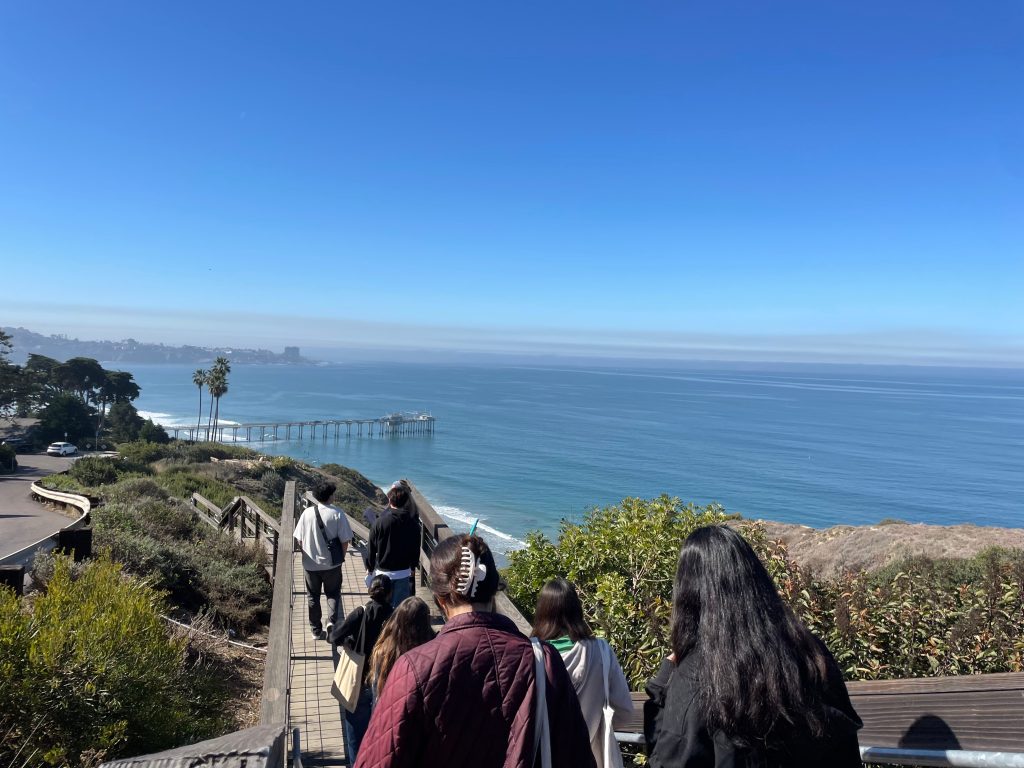
The start of the day foreshadowed the rest of the day. Upon entering the classroom, students and instructors, Maura and Alberto began to interact with each other, and the room came to life with conversation. After this, the students engaged in brief ice-breaker activities, which also served to introduce the day’s guests – Adi and Kalani. After their introduction, the class was split into two groups to visit different labs on campus. Each group would visit one lab and then alternate with the other group after a certain amount of time. The first lab my group went to was down the hill. We were led there by Kalani, as she was the one performing research there. And it was quite a memorable walk. Many students interacted with each other or Kalani, asking her questions about both her work and what she liked doing outside of work. And like the students were eager to answer her questions, she was eager to answer theirs.
Lab Research
Seaweed Cultivation
Seaweed Pressing and Identification
Our Experience in the Labs
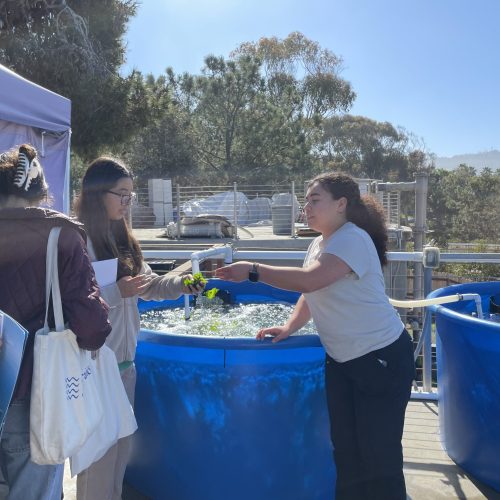
When we reached the lab, Kalani gave us a brief overview of what she was researching, which was the cultivation of different species of seaweed. But before we actually got to look at the research being done, one student asked the question that was probably on everyone’s mind-”Can we take pictures.” The answer was a resounding “Yes.” The first area of the lab we entered was the area where they were cultivating adult specimens. We were shown three tanks of seaweed, each tank holding a different species. Kalani explained the cultivation and biology of seaweed in these tanks, explaining how since they were algae, all cells that made up the specimen were capable of doing photosynthesis.
The three species of seaweed were:
● Nereocystis: Brown algae called Bull Kelp. A lot of students were very familiar with this specific species.
● Dulse: A red algae known as “Bacon of the Sea.”
● Ulva: Green algae that is also known as “Sea Lettuce.”
This algae was enjoyed most by the majority of students during taste-testing. The second area was where they showed us tanks where they cultivated adolescent seaweed. And this area seemed to spark many of the students’ curiosity. One student asked why they separated adults and adolescents, and Kalani explained that it was so the adult specimens wouldn’t overtake and kill the younger specimens. Another student who was looking closely at the tanks noticed something and asked about it. “What is the brown stuff floating at the top of the tank?” This “brown stuff” was explained to be pieces of seaweed that were pushed to the top of the tank by the current. Another student asked about the filters that were in the tank, which were explained to help manage the light the seaweed were getting. Because while they need sunlight, too much sunlight can result in algae bleaching. After these questions, the students were allowed to get closer looks at the tanks via a bridge that stood between the tanks.
After this, we returned to the first area with the adult specimens. The anticipation in the students was palpable because when we had initially arrived, Alberto and Maura had explained we’d be able to taste the seaweed. That had sown the seeds of excitement among the group. And many of them asked if they could now try the seaweed. The answer was “Yes” once again. Kalani and Alberto/Maura actively encouraged it.
Almost immediately, students began feeling and examining the seaweed, as well as tasting each of the species. This hands-on experience led to even more questions among the students such as “Are all blades of seaweed unique?” The student who asked this question compared the blades of seaweed to human fingerprints. Another student asked “What causes the blades to be different shapes and sizes?” Kalani elaborated on what made blades of seaweed unique. One of these was environmental factors. Another was the nutrient requirements for seaweed.
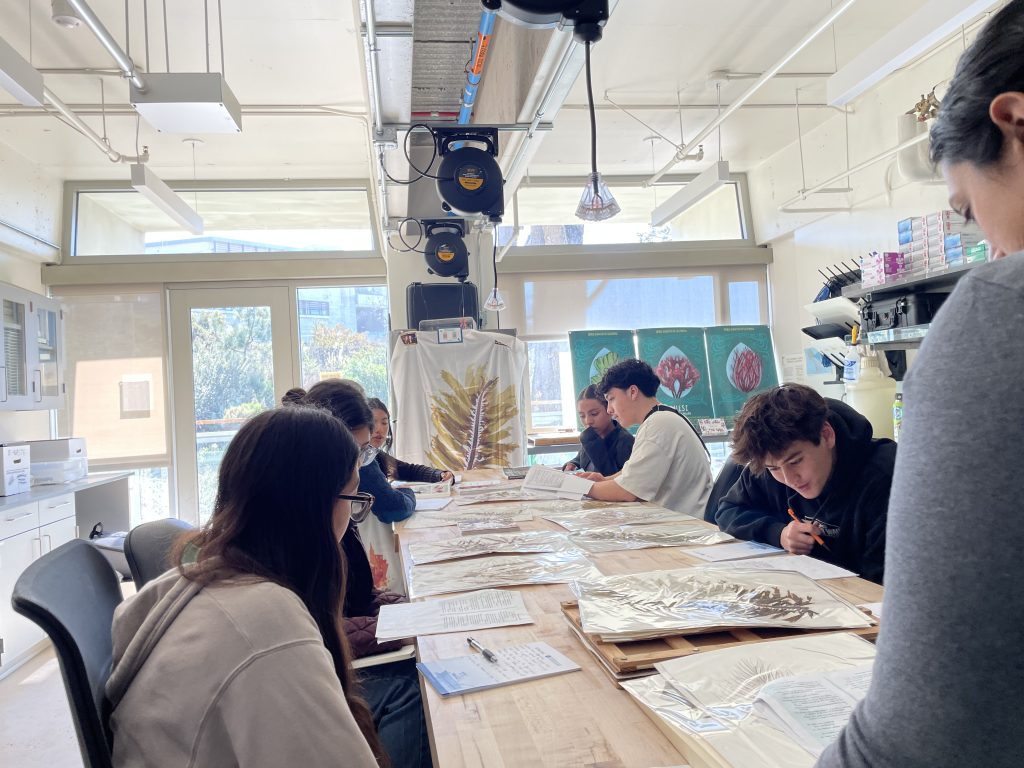
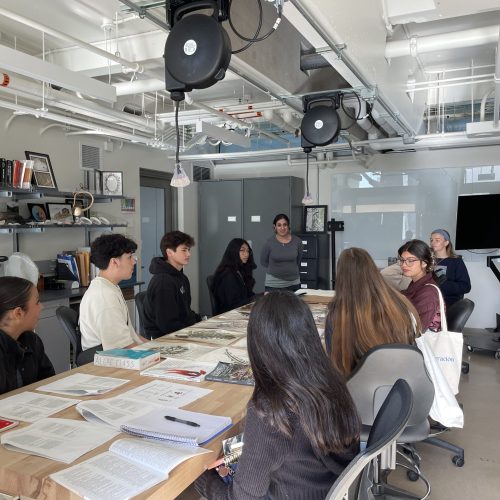
Many of the students tried the seaweed, with the sea lettuce being most liked by the majority of students. My personal favorite was the dulse. After we finished interacting with the seaweed we returned to the classroom, and then made our way to the second lab with Adi. The second lab was much closer. This lab served as the home to seaweed pressings. The pressings were the main reason we were in the lab, though there were other forms of art in the lab as well such as resin preservations of seaweed and cyanotypes. In the lab, we were given multiple pressings to look at Adi explained the process of pressing. As she did, a student asked how they were able to identify different species of seaweed from the pressing, which provided a great segue to the next topic. Adi explained that they used something called a dichotomous key to identify the seaweed. She then gave out multiple pressings for the students to identify using a rudimentary dichotomous key. The students had to cooperate, working together to identify the species. As they did, they continued to ask questions like if the seaweed would continue to change color even after being pressed, with the answer being yes if exposed to sunlight. But after they were finished identifying the seaweed, they continued to ask questions. The curiosity of the students was far-reaching, with some asking to see other pieces of art scattered throughout the room and others asking about the culinary uses of seaweed. Adi answered all the questions happily.
Break and Closing
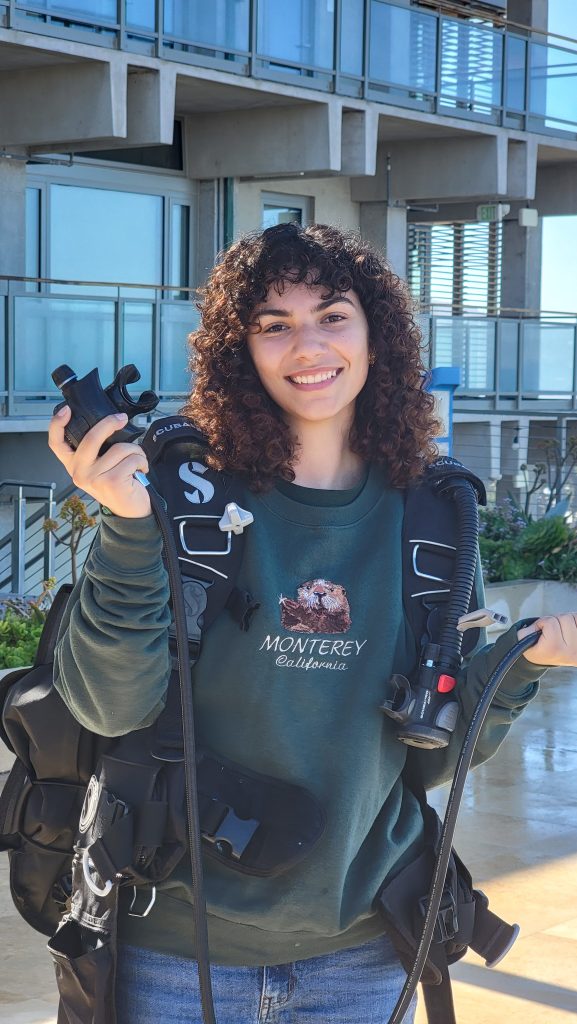
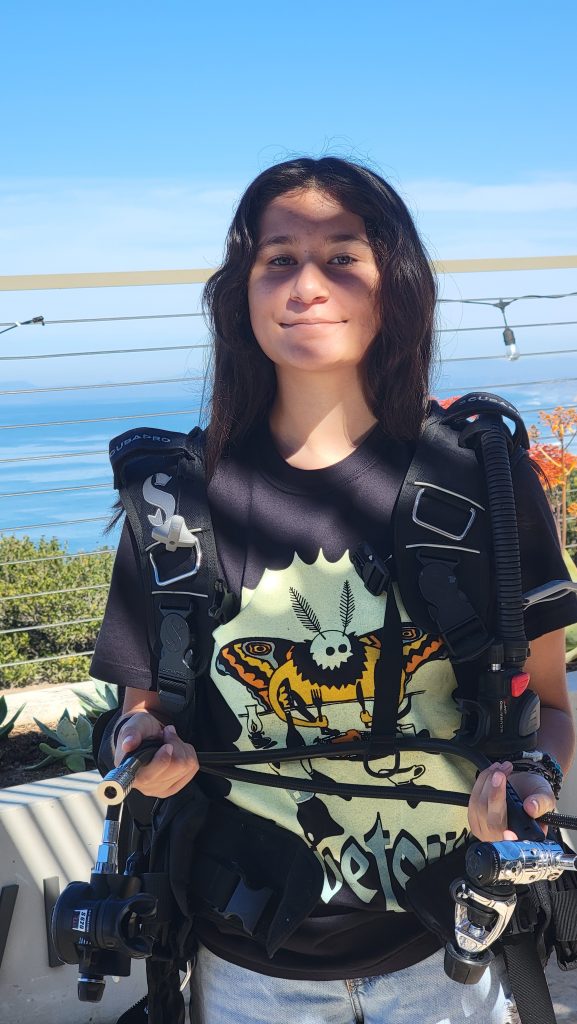
After visiting the first lab, we made our way back to the classroom. Once we reached it, we took a quick break for the students to relax and do things like use the restroom. But during this break, Alberto was asked about diving gear by a student who was interested in diving. Alberto was happy to accommodate the question. He went to retrieve some diving gear for a few of the students. He got the students in a group and showed off the dive gear, and explained how it worked, as well as answering the question “How much does it weigh?” Some of the students were even allowed to try the diving gear on. After the second lab, we returned to the classroom where we went through an activity to cover what the class had learned today. The students got to share many key takeaways of their experiences with students in small groups. Some were eager to share with the entire class.


Responses